Qigong (pronounced chee-gung) is a gentle Chinese practice of slow movement, breath, and focused attention used to build energy, calm, and health. The word means the cultivation of energy, and you can practice it standing, seated, or lying down, at almost any age or level of fitness.
That is the whole of it in two sentences. Everything below is just filling in the picture, so you know what you are looking at before you try it. You do not need to believe anything or understand the theory to begin. Qigong is something you feel first and understand later.
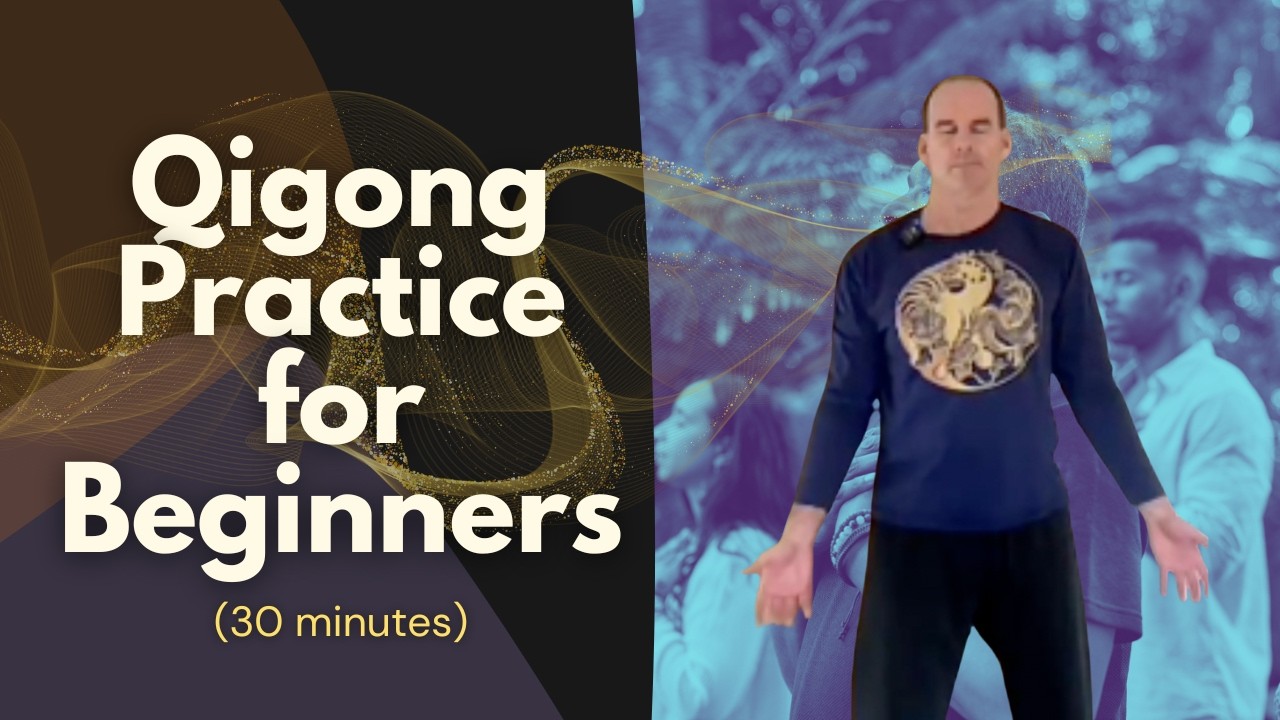
Watch: Qigong Introductory Practice for Beginners, from our Great Energy YouTube channel.
What the word means
Qigong is made of two Chinese words. Qi (say chee) is life energy, the vital breath that animates everything alive. Gong (say gung) means a skill you build through steady, patient work, the same gong that appears in kung fu. So Qigong is, quite literally, the skill of working with your energy. Not a mystical gift a few people are born with, but a practice anyone can learn by doing a little each day.
'Everything is Qigong. Journaling is Qigong. Going for a walk in the woods is Qigong. Taking a nap is Qigong.' Christopher Grant
That line is worth sitting with. At its root, Qigong is about how you tend your own energy, and the formal practice, the movements and the breathing, is simply the most direct way to learn to do that on purpose. Once you have the feel of it, you start to notice you are working with your energy all day long, most of it without thinking.
How to say it
Qigong is pronounced chee-gung. The first part rhymes with tea. The second sounds like the word gong with a softened g. You will also run into the older spellings chi kung and chi gong, which point to the exact same practice. The spelling changed over the years as Chinese was written in the Roman alphabet in different ways. If you see any of them, you are in the right place.
Is Qigong a martial art?
No, not the Qigong most people come to learn. It is easy to assume it is, because it comes from China and it looks a little like the slow forms you may have seen in a park. But Qigong is an energy and health practice, not a fighting art. There is no sparring, no opponent, no self-defense.
The confusion has a real root. For centuries, martial artists have used Qigong to build stamina, root their stance, and steady the mind, and some hard styles of Qigong were trained for exactly that. The practice you will find on this site and in most classes today is the gentle branch, the one built for vitality, calm, and long health. If you are weighing it against a slow martial art, our guide to Qigong versus Tai Chi lays out the difference clearly.
Where Qigong comes from
Qigong is old, and it did not appear all at once. Its ancestor is a practice called Dao Yin, a set of guiding and stretching exercises drawn on silk and cave walls in China more than two thousand years ago. People used these movements to open the joints, ease the breath, and keep energy moving through the body. Over the centuries that stream of practice grew, took in breathing methods and meditation, and became what we now call Qigong.
It matters that Qigong is one of the branches of traditional Chinese medicine, sitting alongside acupuncture, herbs, and bodywork. In that tradition it was never entertainment or sport. It was medicine you did for yourself, a way to keep the body's energy flowing freely so that health could look after itself. That is still the spirit of it. You are learning to care for your own energy with your own hands and breath. For the working vocabulary behind all of this, the terms qi, dantian, and the meridians, see our beginner's glossary.
What Qigong feels like
This is the part words struggle with, so I will keep it honest. Most beginners feel three things fairly quickly. The first is a settling. The breath slows, the shoulders drop, and the mind quiets a notch, the way it does after a good walk. The second is warmth or a soft tingling, often in the hands, as circulation and attention gather there. The third is a kind of pleasant heaviness, a sense of the body letting go of tension it had been holding without knowing it.
None of it is dramatic. Qigong is not a rush. It is closer to the feeling of stepping into warm water, a gradual ease that deepens the longer you stay. Some days you feel a lot, some days a little, and both are fine. If you want to understand the palm-warmth and tingling more, our note on how to feel qi walks through it. And if you would rather stop reading and simply try, the beginner's guide to getting started and a set of simple exercises for beginners will get you moving in a few minutes.
What is Qigong good for?
People come to Qigong for different reasons, and the common ones are simple: more energy through the day, a calmer and less reactive mind, better sleep, easier movement in a stiff body, and steadier focus. Because it is gentle and adaptable, it suits a wide range of ages and abilities, which is a large part of why it has lasted. We keep the honest evidence separate rather than overstating it here, so if you want to see what regular practice has actually been shown to do, read what the research says about Qigong. And when you are ready to learn from a teacher, our page on the schools and teachers Christopher trained with is an honest place to start.
The three parts of a practice
Qigong at a glance
| Qigong at a glance | |
|---|---|
| Say it | 'Chee-gung' |
| What it is | Slow movement, easy breathing, and quiet attention |
| Where it comes from | The same Chinese tradition as Tai Chi and acupuncture |
| Who it is for | Any age or fitness level; much of it can be done seated |
| What you need | A few minutes and room to stand; no equipment |
Watch: videos on this topic
This is educational content, not medical advice, and nothing here is offered as a treatment or cure for any health condition. Practice within your own comfortable range and rest when you need to. If you have a health condition, are pregnant, or have any concern about exercise, check with your own practitioner before beginning a new practice.