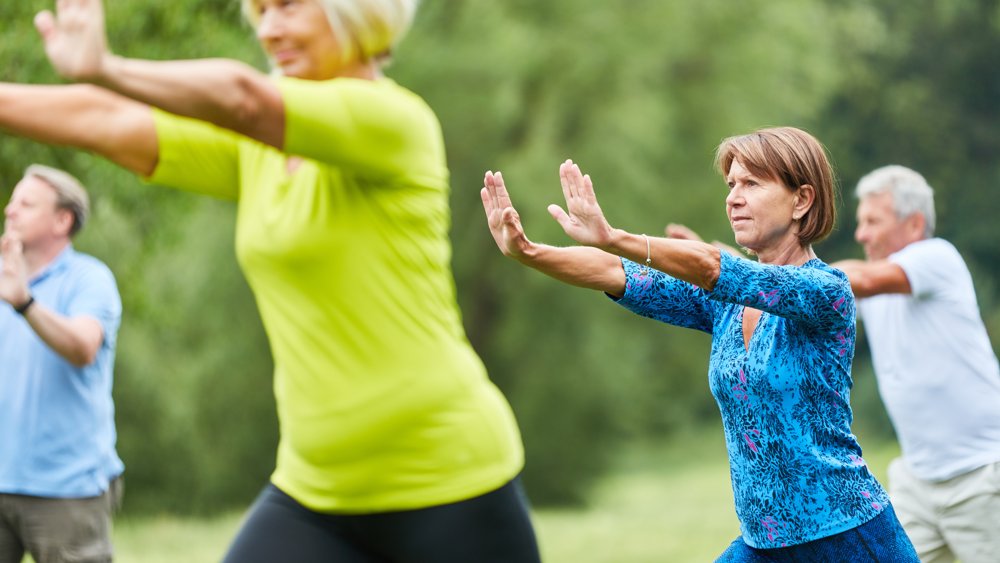
If you have been curious about Qigong but were not sure where to begin, this is the page for you. There is no secret prerequisite and nothing to buy. You do not need to be fit, flexible, or spiritual. You need a few minutes and a bit of room to stand. This guide explains what the practice is in plain terms, what beginners actually feel, what you need to start, and a short first practice you can do right now.
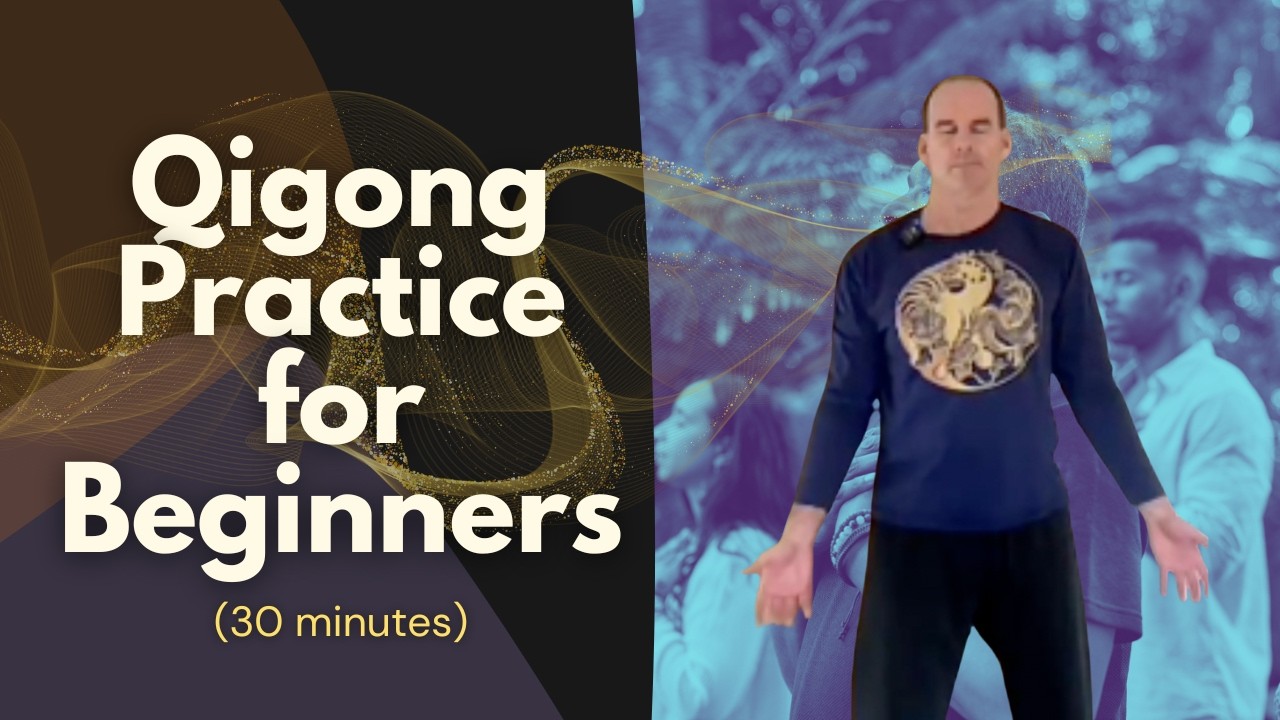
Watch: Qigong Introductory Practice for Beginners, from our Great Energy YouTube channel.
What Qigong is, in plain terms
Qigong (say it 'chee-gung') is a gentle practice of slow movement, easy breathing, and quiet attention. The word means something close to 'working with energy' or 'cultivating energy,' and in practice it is less mysterious than it sounds. You move your body slowly, you let your breath settle, and you pay attention to how you feel. That is most of it.
It comes out of the same Chinese tradition as Tai Chi and acupuncture, and it has been practiced for a very long time as a way to keep the body loose, the breath deep, and the mind calm. You do not need to believe anything in particular for it to work on you. You do the movements and you notice. Want the fuller definition and history? See what is Qigong.
The cultivation of qi is when body, breath, and mind all come together. That's how simple it is. We just have to choose and remember. Christopher Grant
What it feels like
Most beginners describe the same handful of things. A warmth in the hands. A softening in the shoulders and jaw. A slower, fuller breath. A quiet that arrives without you forcing it. Some people feel a faint tingling in the palms, which is normal and nothing to chase. Others feel nothing dramatic on day one and simply notice they are calmer afterward. Both are fine. Qigong is not a performance, and there is no sensation you are supposed to manufacture.
What you need (nothing special)
Almost nothing. You need enough room to stand and raise your arms, comfortable clothes you can move in, and about ten minutes. No mat, no equipment, no special shoes; bare feet or socks are fine. You can practice indoors or outside. If standing is hard for you, you can do most of it seated in a chair, and it still counts.
A simple first practice you can do today
Here is a short sequence a complete beginner can do right now. Move slowly and stay well within what feels comfortable. If anything hurts, ease off or stop. This is your practice, and there is never any pressure to reach further than your body wants to go.
- Stand and settle. Stand with your feet about hip width apart, knees soft rather than locked. Let your arms hang. Take three slow breaths and feel your feet on the floor.
- Gentle shake and release. Let your knees bounce lightly so a soft, easy shake travels up through your legs, hips, arms, and hands. Keep it loose and unforced, like shaking water off your hands. Do this for about thirty seconds to a minute, then slow the bounce down and come to stillness. Stand quietly and notice the warmth or the buzz that is left behind. This is the simplest way to loosen tension and wake the body up.
- A few slow breaths with the arms. Breathe in slowly through the nose and float both arms out and up in front of you to about chest height, as if lifting something light. Breathe out slowly and let the arms sink back down. Let the breath lead and the arms follow. Repeat six to eight times, going as slow as feels good.
- Rest and notice. Stand or sit still for a few breaths. Notice your hands, your breath, your mood. That noticing is part of the practice, not an afterthought.
That is a real Qigong session. It is short on purpose. The point is not to do a lot; the point is to do a little, well, and often. If you want the structure underneath a session like this, we set it out in full as the six components that make a Qigong session complete. When you want a set morning sequence, our 10-minute morning routine gives you one, and Qigong breathing for beginners goes deeper on the breath.
- Stand and settleFeet hip width apart, knees soft, arms hanging.3 slow breaths
- Shake and releaseA soft bounce from the knees, then stillness.30 seconds to 1 minute
- Arms and breathArms float up on the in-breath and sink on the out-breath.6 to 8 times
- Rest and noticeNotice your hands, your breath, your mood.A few breaths
Then keep it going: 10 to 15 minutes on most days does more for you than an hour once in a while.
How often to start
Ten to fifteen minutes on most days will do more for you than an hour once in a while. Consistency matters more than length or intensity, especially at the start. If you can practice five or six days a week for a couple of weeks, you will likely notice you feel steadier, sleep a little easier, and carry less tension in your shoulders. If you miss a day, you have not broken anything; just pick it up again the next morning. For an honest look at what regular practice does, and does not do, see what the research says and our page on Qigong benefits.
Common beginner questions
Do I need to be fit or flexible to start Qigong?
No. Qigong is one of the most accessible movement practices there is. The movements are slow, low impact, and easy to scale down. If you can breathe and move a little, you can practice. Many people begin while recovering from injury or illness, and a good deal of it can be done seated.
How long before I feel something?
Often the same day. Many beginners feel calmer and looser right after their first session. Deeper changes, like steadier sleep or more even energy, tend to show up over a few weeks of regular short practice. Everyone is different, so notice your own experience rather than chasing a result.
Can I do Qigong sitting down?
Yes. Most of the gentle movements and all of the breathing can be done seated in a chair. Seated practice is a genuine practice, not a lesser version, and it is a good choice on low-energy days or if standing is hard.
Do I need special clothes or equipment?
No. Loose, comfortable clothing and a bit of floor space are all you need. No mat, props, or shoes required.
How is Qigong different from Tai Chi or yoga?
Qigong tends to be simpler and quicker to learn than Tai Chi, which strings movements into longer choreographed forms. Compared with most yoga, Qigong is gentler on the joints and asks less of your flexibility. We compare the two in detail in Qigong vs Tai Chi. If you would rather learn with a teacher, our Schools page can help you find one.
Watch: videos on this topic
This page is educational and is not medical advice. It is not a claim that Qigong treats, cures, or prevents any condition. Individual results vary. If you have a health condition, are pregnant, or take medication, talk with your own doctor or practitioner before beginning a new practice.