
How you begin the morning tends to set the tone for everything that follows. Reach for the phone first and the day starts scattered. Take ten minutes to move slowly and breathe low, and you meet the day from a calmer place. This routine is built for a complete beginner. It moves through four simple stages: shake and release, gentle warm-ups, a few slow breaths, and a calm close. Read it once, then follow along. It should feel easy the whole way through.
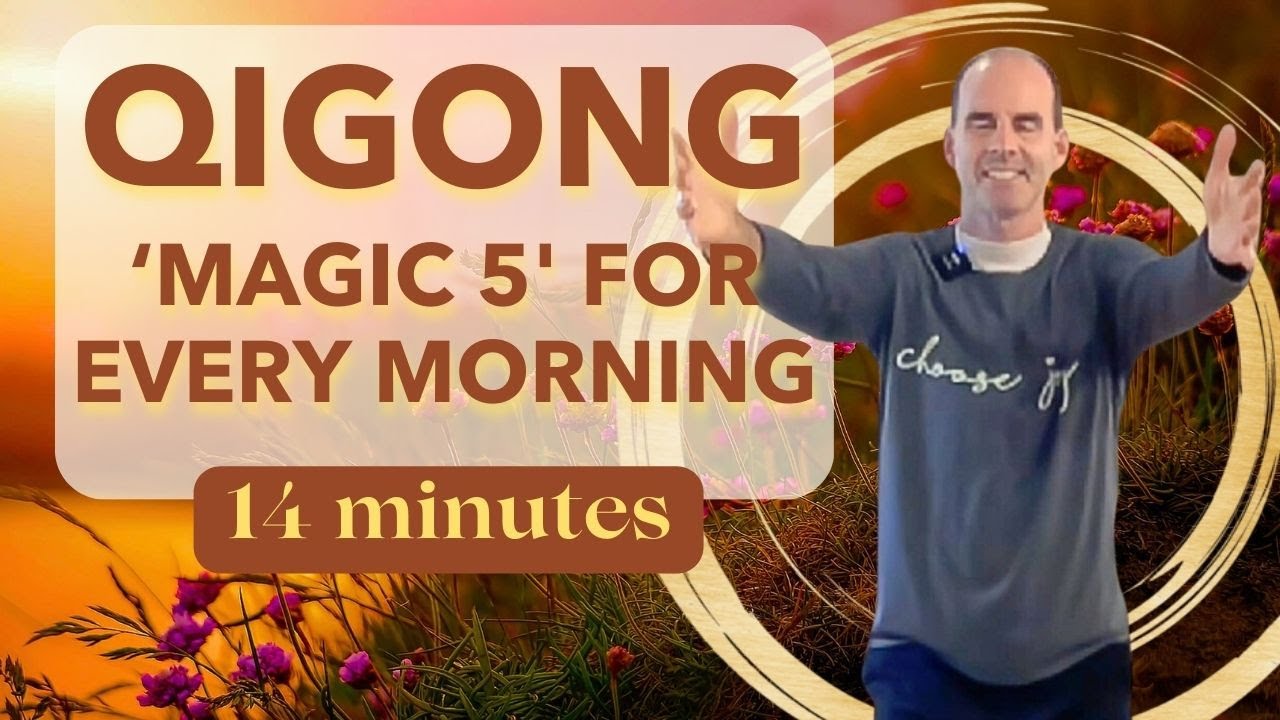
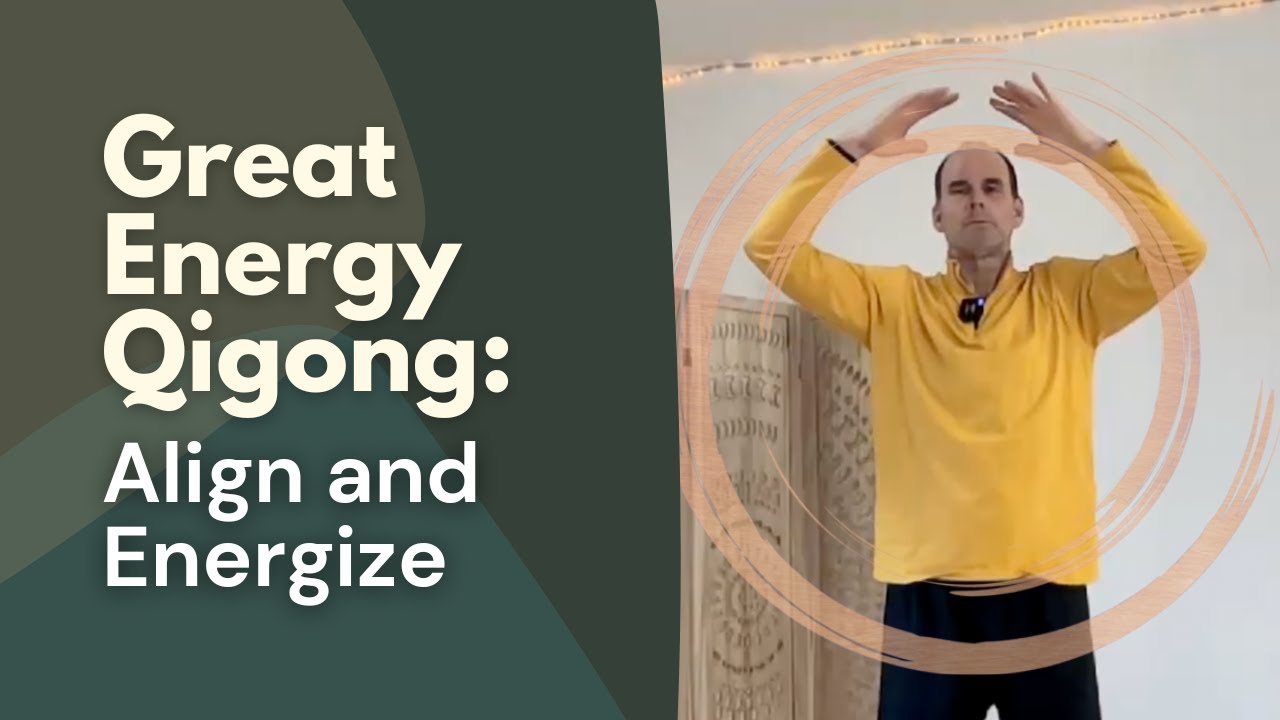
Watch: Morning Qigong Routine: Claim the First 5 Minutes of Your Day, from our Great Energy YouTube channel.
The routine at a glance
| Stage | What you do | Time |
|---|---|---|
| 1. Shake and release | Loosen the body, wake up circulation | 2 minutes |
| 2. Gentle warm-ups | Soft joint and spine movements | 4 minutes |
| 3. A few slow breaths | Arms rise and fall with the breath | 2 minutes |
| 4. Calm close | Hands rest, gather and settle | 2 minutes |
1. Shake and release (2 minutes)
Shaking is the fastest way to wake the body and shake off the stiffness of sleep. It sounds too simple to matter. It works anyway.
- Stand with your feet about hip width apart, knees soft and slightly bent, arms hanging loose at your sides.
- Begin a light, easy bounce from the knees, letting your whole body jiggle. Let the arms flop and the shoulders loosen. Keep it gentle, nothing jarring.
- Let the shaking travel through your hands, wrists, and shoulders. Imagine yesterday's tension loosening and dropping away with each bounce.
- After about ninety seconds, slow the bounce down until you come to a still, standing pause. Notice the tingle and warmth in your hands. That is circulation waking up.
2. Gentle warm-ups (4 minutes)
Now loosen the main joints and the spine, slowly and softly. Do a small number of each, and never push into pain.
- Neck softening. Slowly let your chin lower toward your chest, then float the head back up to level. Gently turn to look over one shoulder, then the other. Keep it small and easy. About five slow rounds.
- Shoulder rolls. Roll both shoulders up, back, and down in a slow circle, like drawing a smooth loop. Five one way, then five the other way. Let them fall heavy at the bottom of each circle.
- Waist turns. With feet planted and knees soft, let your arms hang loose and swing your torso gently from side to side, turning at the waist so the arms swing around and tap your body. Let the head follow the turn. About ten easy swings.
- Hip and knee circles. Hands on hips, make slow easy circles with the hips, five each direction. Then, if your balance is steady, small soft circles with each knee.
- Reach and settle. Breathe in and float both arms out to the sides and up overhead, reaching gently toward the ceiling. Breathe out and let them float back down. Repeat three or four times, unhurried.
3. A few slow breaths with movement (2 minutes)
This is the heart of the routine, where breath and movement become one thing. Move slowly enough that the breath never runs out partway through.
- Stand with feet hip width, knees soft, arms resting in front of you with palms facing up, as if holding something light and warm at belly height.
- Breathe in slowly through the nose and let both arms float up in front of you toward chest or shoulder height, palms gradually turning to face you.
- Breathe out slowly and let the arms sink back down, palms turning to face the floor, as if pressing something gently downward. Let the knees soften a little more as the arms lower.
- Repeat six to eight times. Let the breath lead and the arms follow. If you want to go deeper on this, see our full guide to Qigong breathing for beginners.
'Whatever else comes, I get some time for me that I don't give up. If it's not an emergency.' Christopher Grant
4. Calm close (2 minutes)
Never skip the ending. Gathering and settling at the close is what lets the calm carry into your day. That order, opening and building and then settling, is the same progression we use to shape a full class, set out in the Five Elemental Class Design Framework.
- Stand still, feet hip width, and rest both palms over your lower belly, one hand over the other, just below the navel.
- Breathe slowly and low into the belly under your hands, the way you practiced in the breathing stage. Feel the belly gently rise and settle.
- Take six to ten quiet breaths here, letting your attention rest in the warmth under your hands.
- When you are ready, lower your hands, open your eyes if they were closed, and take a moment before you move on. Notice how you feel now compared to when you started.
A gentler, seated version
This whole routine works seated, and seated is the smart choice on a low-energy morning, if standing balance is a concern, or simply if you prefer it. Sit tall but relaxed toward the front of a sturdy chair with both feet flat on the floor. For the shaking, bounce your heels lightly and shake out the arms and hands. Do the neck softening, shoulder rolls, and gentle waist turns exactly as described. For the breathing movement, let the arms float up and sink down while seated. Finish with both hands on the lower belly and a few slow breaths. You lose nothing by sitting. A routine you keep beats a perfect one you skip.
- Shake and releaseStandingA light, easy bounce from the knees.SeatedBounce your heels, shake out the arms and hands.2 minutes
- Gentle warm-upsStandingNeck, shoulders, waist turns, hip and knee circles, reach and settle.SeatedNeck, shoulders and waist turns.4 minutes
- Slow breaths with movementStandingArms float up on the in-breath and sink on the out-breath, 6 to 8 times.SeatedThe same movement, from the chair.2 minutes
- Calm closeStandingPalms on the lower belly, 6 to 10 slow breaths.SeatedHands on the lower belly, a few slow breaths.2 minutes
You lose nothing by sitting. A routine you keep beats a perfect one you skip.
Making it stick
The routine only works if you come back to it. A few things help. Keep it short, because ten minutes is easy to protect and an hour is easy to postpone. Attach it to something you already do, like putting it right after you brush your teeth or right before your first coffee. And forgive the missed days without drama. If you miss a morning, you simply begin again the next. For more on the rhythm that makes practice stick, see how often to practice Qigong, and if you are brand new to the whole thing, start with the beginner's guide to getting started. Prefer to wind down at night? The calming bedtime routine is the evening companion to this one. You can also read what the research shows about regular Qigong practice.
Watch: videos on this topic
This is educational content, not medical advice, and nothing here is offered as a treatment or cure for any health condition. Move slowly, stay within a comfortable range, and never push into pain. If you feel lightheaded or dizzy at any point, pause and rest. If you are pregnant, have a health condition, or have any concern about balance or exercise, check with your own practitioner before beginning a new practice.