Qigong and Yoga get compared all the time, and for good reason. Both are ancient, both link breath with movement, and both leave people feeling calmer and more at home in their bodies. If you are trying to decide where to begin, it helps to see clearly how they are alike, where they genuinely differ, and which one is likely to suit you. This guide lays that out plainly, with a side-by-side table and an honest recommendation at the end.
The short answer: if you want a gentle practice with almost nothing to learn, little demand on flexibility, and a slow pace focused on the breath, Qigong is the easier first step. If you are drawn to deeper stretching, holding shapes, and building strength and flexibility over time, Yoga may suit you better. Both are good for you, and many people happily do both.
Watch: Learn Healing Qigong with Christopher and Daniela, from our Great Energy YouTube channel.
Where they come from
Yoga grew out of India over thousands of years, rooted in a spiritual and philosophical tradition, and the physical postures most Western classes teach are one branch of a much larger system. Qigong grew out of China and is part of the same broad tradition as Chinese medicine, developed as a way to keep energy moving and support health. They are cousins in spirit but not the same family. Understanding that difference in origin explains a lot about how each one feels in practice. For more background, see our plain-English look at Qigong for beginners.
How they move
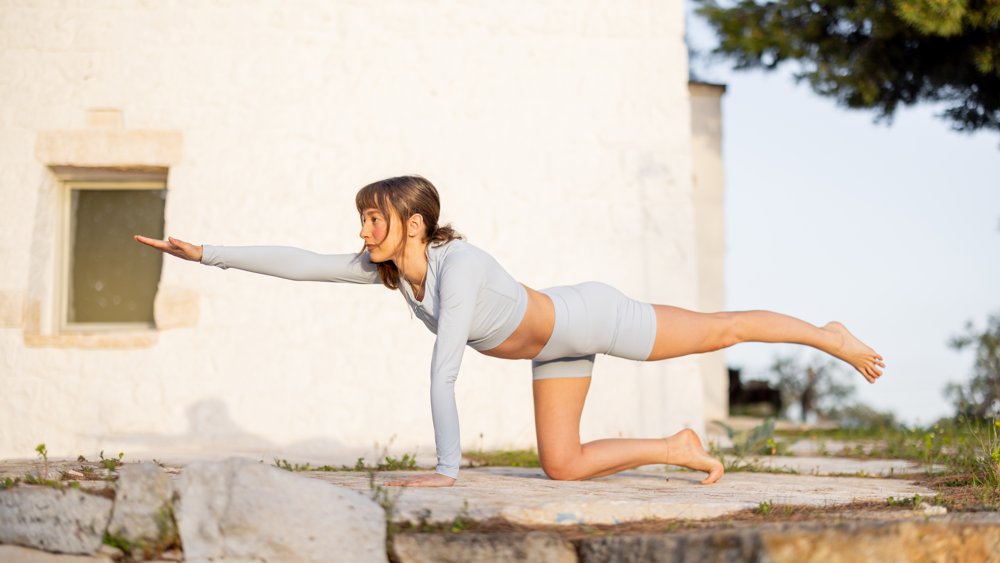
This is the difference you feel most. Yoga is built largely around postures, called asanas, that you move into and hold, linking them with breath and often working into a deep stretch. Qigong is built around slow, flowing, often repeated movement. You are rarely still and rarely stretching to your edge. Instead you move gently and continuously, coordinating each movement with the breath. Qigong also puts steady, overt attention on the felt sense of energy in the body, which is where its name comes from. If you are curious about that felt sense, our guide on how to feel qi explains what beginners notice.
Your body is designed to move. Every kind of stagnation can be connected back to movement. Christopher Grant
Both practices span gentle to demanding, so this is the typical pattern, not a hard rule.
Intensity and demand on the body
Both practices span a wide range, from very gentle to quite demanding. That said, a typical popular Yoga class asks for more flexibility, more balance, and more weight bearing through the arms and wrists than a typical Qigong session. Qigong stays low in physical demand by design, which is part of why it suits older beginners, people recovering from injury, and anyone who wants movement without strain. It also scales down easily to a chair. There are gentle and restorative styles of Yoga that are just as kind to the body, so this is a tendency rather than a hard rule.
What each one focuses on
Yoga, in most modern classes, focuses on the body through posture, flexibility, strength, and breath, with a meditative thread running underneath. Qigong keeps its focus on circulating energy and settling the nervous system, using slow movement and breath as the vehicle. Both can calm you and both can energize you. The practical difference is that Qigong tends to keep the pace slow and the attention on the breath the whole way through, which many people find calming quickly. There is real research on gentle movement practices for stress and wellbeing, and you can read an honest summary of what it shows on our research page.
Qigong and Yoga side by side
| Qigong | Yoga | |
|---|---|---|
| Origin | China, part of the same tradition as Chinese medicine | India, rooted in a spiritual and philosophical system |
| Movement style | Slow, flowing, often repeated; rarely still | Postures you move into and hold, linked with breath |
| Intensity | Generally low and gentle; easy to scale down | Ranges from gentle to vigorous, depending on the style |
| Main focus | Circulating energy, breath, settling the nervous system | Posture, flexibility, strength, breath, meditation |
| Demand on the body | Little flexibility or strength needed to start | Often asks for more flexibility, balance, and arm strength |
| Ease of learning | Very easy; usable on day one, little to memorize | Gentle at first, with more shapes and alignment to learn |
| Suits you if you want | A gentle, low-effort daily practice focused on calm and energy | Deeper stretch, building strength and flexibility over time |
Which suits you as a beginner?
Here is the honest recommendation. If you want to feel calmer and more energized without a learning curve, if flexibility or past injury makes you cautious about deep stretching, or if you simply want something you can do in a few gentle minutes each day, start with Qigong. It asks very little of you on the first day and gives back right away. If you love a deep stretch, want to build strength and flexibility, and enjoy learning a range of shapes and alignment, Yoga is a wonderful path and worth the fuller learning it asks for.
You do not have to pick one and stay there. Plenty of yoga practitioners add Qigong for its flowing, energizing feel and its focus on the breath, and plenty of people who begin with Qigong later enjoy the deeper stretch of Yoga. The best practice is the one you will actually return to most days. If you are unsure, start with the gentler doorway, and let your own experience tell you what your body wants more of.
Common questions
Are Qigong and Yoga the same thing?
No. They come from different cultures, China and India, and grew from different traditions. They share a family resemblance because both coordinate breath, movement, and attention, but Yoga is built mostly around held postures and stretching, while Qigong is built around slow, flowing, repeated movement.
Is Qigong easier than Yoga for beginners?
For many beginners, yes. Qigong movements are gentle and often repeated, so there is little to memorize and less flexibility or strength required to start. Yoga can also be gentle, though many popular classes ask for more flexibility, balance, and weight bearing through the arms.
Which is better for stress, Qigong or Yoga?
Both help most people relax. Qigong tends to keep the pace slow and the attention on the breath the whole time, which many people find calming quickly. Gentle and restorative styles of Yoga are calming too. For a low-effort daily practice aimed mainly at settling the nervous system, Qigong is an easy first choice. See our routine for Qigong for anxiety and stress.
Can I do both Qigong and Yoga?
Yes, and they complement each other well. Many yoga practitioners add Qigong for its flowing, energizing quality, and many people who start with Qigong later enjoy the deeper stretch of Yoga. You do not have to choose one forever.
This page is educational and is not medical advice. It is not a claim that Qigong or Yoga treats, cures, or prevents any condition. Individual results vary. If you have a health condition, are pregnant, or take medication, talk with your own doctor or practitioner before beginning a new practice.