Almost everyone who takes up Qigong wants to know the same thing early on. What is this qi people talk about, and will I actually feel it? It is a fair question, and the good news is that feeling qi is one of the most approachable experiences in the whole practice. You do not need to believe anything in advance. You just need a quiet moment, relaxed hands, and a little patience. This page gives you a simple exercise to try, describes what beginners commonly notice, and reassures you if nothing much happens the first time.
In Qigong, qi (say it 'chee') is understood as your life energy, the animating force moving through the body. You do not have to settle the deeper question of exactly what it is to work with it. What matters for a beginner is the felt sense, the actual sensations you notice when you slow down and pay attention. If you want the fuller definition, our beginner glossary covers qi, dantian, and the meridians in plain language.
Where our attention goes, energy is flowing, whatever that is, wherever that is. Christopher Grant
Watch: Feel Your Chi with Great Energy, from our Great Energy YouTube channel.
A simple palm-sensing exercise
This is the classic first taste of qi, and you can do it right now, seated or standing. Give yourself a couple of unhurried minutes and a reasonably quiet space. The whole thing depends on being relaxed, so there is no need to try hard or make anything happen.
- Warm the hands. Rub your palms together briskly for ten to fifteen seconds until they feel warm and awake. This simply brings your attention into your hands.
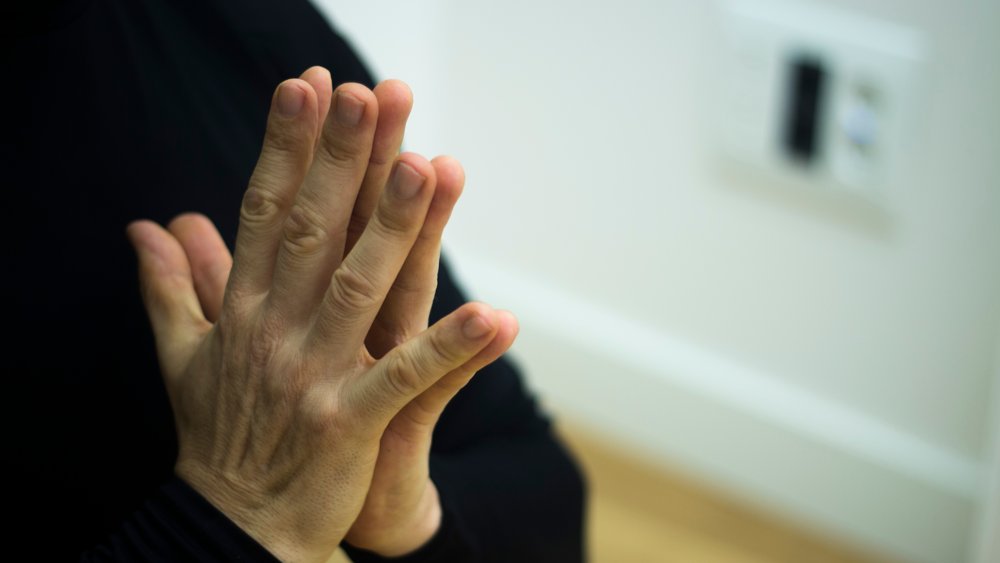
- Hold your palms apart. Stop rubbing and hold your palms facing each other, a few inches apart, as if you were holding a small invisible ball. Let your shoulders and arms relax. Breathe slowly.
- Listen with your hands. Do nothing but pay gentle attention to the space between your palms. Give it fifteen or twenty seconds. Notice any sensation at all, however faint.
- Slowly move them apart and together. Very slowly draw your palms a little further apart, then bring them a little closer, as if gently stretching and squeezing that invisible ball. Move slowly enough that you can feel each moment. Many people notice something here that they did not notice while holding still.
- Rest and notice. Let your hands come down and simply notice how they feel now compared to before. That is the whole exercise.
What beginners commonly notice
There is no single correct sensation, and people describe it in different ways. These are the ones beginners report most often:
- Warmth. A soft heat in the palms or between the hands, more than the rubbing alone would explain.
- Tingling or buzzing. A light pins-and-needles or fizzing feeling in the fingers and palms.
- Thickness or pressure. A sense that the air between your palms has become dense, spongy, or slightly resistant, like a cushion.
- Magnetism. A gentle push and pull as you move the palms, as if two magnets are quietly attracting and repelling.
- Pulsing or fullness. A subtle throb, or a feeling that the hands are full and slightly expanded.
Whatever you notice, however subtle, is what it feels like for you right now. There is no prize for the strongest sensation. The skill is not forcing a big experience, it is getting quiet enough to notice a small one. As your attention settles over time, what was faint tends to become clearer.
A gentler version if the standard one is tricky
If holding your arms up feels like a strain, or you notice nothing and it starts to feel like effort, make it easier. Rest your forearms on a table or on your thighs so your shoulders can fully relax, and keep your palms just an inch or two apart. You can also skip the movement and simply hold still with warm palms close together, breathing slowly, letting your attention rest there like you are keeping your hands warm by a small fire. The more relaxed you are, the easier the subtle sensations are to notice. Straining actually works against you here.
If you do not feel anything yet
This matters, so read it carefully: not feeling much yet is completely normal, and it does not mean anything is wrong with you or the practice. The sensations are genuinely subtle, and noticing them is a skill that comes with a relaxed body and a settled mind. If you are tired, tense, distracted, or trying too hard, they are easy to miss. None of that is a failure. Plenty of people feel almost nothing the first few times and then, on some unremarkable day, clearly notice the warmth or the magnetic pull. Keep it light, come back to it another day when you are relaxed, and let it arrive on its own. You are not chasing a sensation, you are learning to pay attention, and that attention is worth practicing whether or not the tingling shows up today.
Where this leads
Feeling qi in the hands is a doorway. The same quality of relaxed attention you just practiced is what you bring to the slow movement and breath of a full Qigong session, and that is where the settling, calming benefits come from. If you would like a gentle first practice, start with our Qigong for beginners guide, or try our short routine for Qigong for anxiety and stress to feel how the same attention calms the whole body. Curious how it compares to other practices? See Qigong vs Yoga. And if you like to know what the studies say, our research page gives an honest summary.
Common questions
What does qi feel like?
Beginners most often describe warmth, a light tingling or buzzing in the hands, a feeling of thickness or pressure between the palms, and a gentle push and pull like two magnets. There is no single correct sensation. Whatever you notice, however subtle, is what it feels like for you right now.
Why can't I feel qi yet?
Not feeling much yet is completely normal, especially early on. The sensations are subtle, and it usually takes a quiet space, a relaxed body, and a little patience for your attention to settle enough to notice them. It does not mean anything is wrong. Keep it light, try again another day, and let it come on its own.
Is feeling qi the same as feeling blood flow or warmth?
In Qigong, qi is understood as your life energy, and the felt sensations are simply how that is experienced in the body. Whether you explain what you feel as circulation, nerve sensation, warmth, or energy, the practice is the same. You do not need to settle the explanation to benefit from paying attention.
How long does it take to feel qi?
Some people notice something the very first time. Others take days or weeks of short, relaxed practice before it becomes clear. Both are normal. The more relaxed and unhurried you are, the easier the subtle sensations are to notice.
Feeling the ball of qi
This page is educational and is not medical advice. It is not a claim that Qigong treats, cures, or prevents any condition. Individual results vary. If you have a health condition, are pregnant, or take medication, talk with your own doctor or practitioner before beginning a new practice.