When you are anxious or wound tight, your body is not waiting for a lecture. It is waiting for a signal that it is safe to unclench. Qigong is a simple way to send that signal. You slow the breath, you move slowly and gently, and you bring your attention back into your body. Nothing dramatic happens, and that is the point. You are giving an overworked system a few minutes to shift out of high alert.
This page gives you a short beginner routine and a plain look at why it tends to help. It is a self-care practice, not a cure. If anxiety is running your days, please read the note near the bottom and talk with someone who can help. What follows is something calming you can do for yourself, today, with nothing to buy and nothing to learn first.
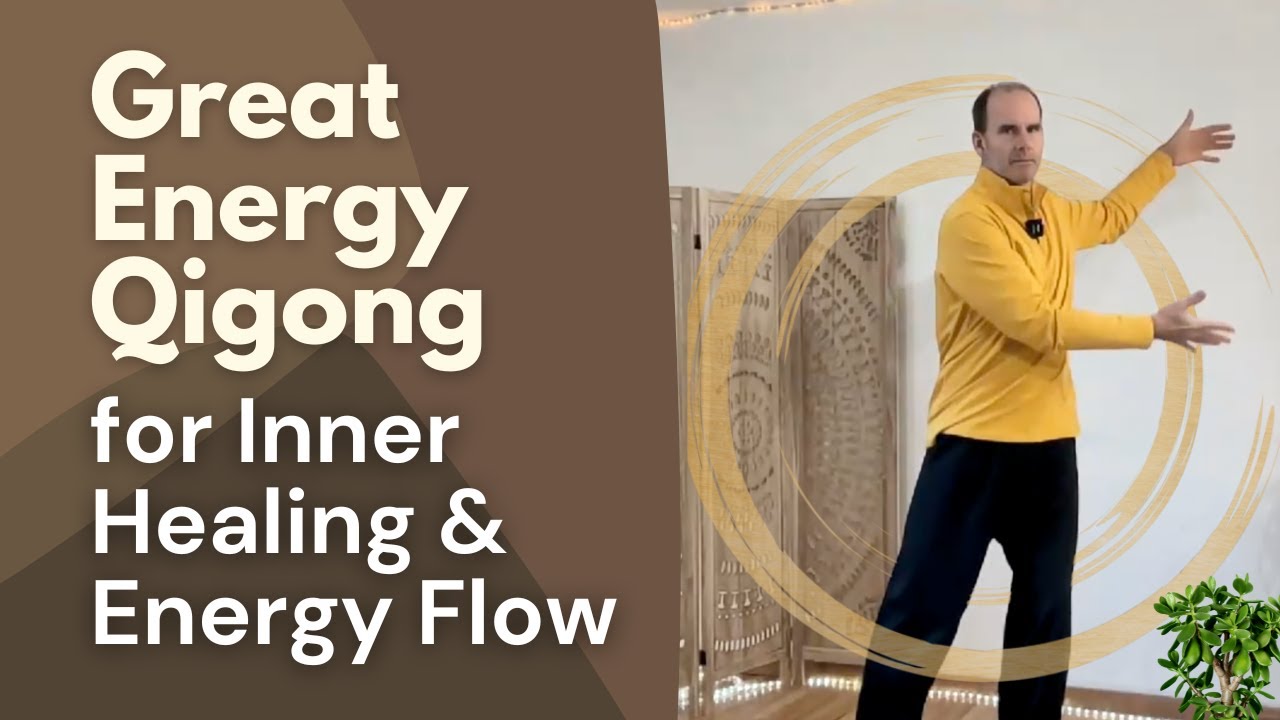
Watch: Great Energy Healing Qigong, from our Great Energy YouTube channel.
Why slow breath and slow movement settle you
Your nervous system has two broad gears. One gears you up to meet a challenge, quickening the heart and tightening the muscles. The other slows things down so the body can rest, digest, and recover. That calming branch is often called the parasympathetic nervous system, and one of the most reliable ways to lean on it is to breathe slowly, especially with a long, easy exhale. A gentle, unhurried out-breath is a message your body reads as, we are not under attack, we can ease off.
Slow movement adds to this. When you move without rushing and keep your attention on the sensation of moving, you give the busy, worrying mind a single, quiet thing to do. Muscles that have been braced all day get a chance to loosen. There is a growing body of research on gentle movement and breathing practices for stress and mood, and you can read an honest summary of what the studies do and do not show on our research page. The short version is that slow breath and slow movement are a sensible, low-risk way to help yourself feel calmer.
When we release tension from the body and soothe the nervous system, the mind naturally calms down. Christopher Grant
- Meets a challenge
- Quickens the heart
- Tightens the muscles
- Slows things down
- Lets the body rest, digest and recover
A gentle, unhurried out-breath is a message your body reads as: we are not under attack, we can ease off.
A gentle 8-minute routine
Find a spot where you will not be interrupted. You can stand with your feet about hip width apart, knees soft, or you can sit tall in a chair with your feet flat on the floor. There is no right way to look. Move slowly, breathe through your nose if you can, and stop or ease off anytime something does not feel good.
1. Arrive and let the breath lengthen (2 minutes)
Stand or sit and let your shoulders drop. Rest one hand on your belly. Breathe in through the nose so the belly gently expands under your hand, then breathe out slowly, letting the exhale be a little longer than the inhale. Do not force it. You are just noticing the breath and letting it slow down on its own. This alone is the most useful part of the whole routine.
2. Loosen and shake (1 minute)
Let your arms hang and give your hands and wrists an easy shake, as if flicking water off your fingers. Add a gentle bounce in the knees if you are standing. Keep it light and loose. Shaking helps drain off nervous, held-in energy, and it is hard to stay clenched while you do it.
3. Gather and lower (2 minutes)
Turn your palms up in front of you and slowly float your arms out and up to about chest height as you breathe in, as if lifting something light. Then turn the palms down and let your arms sink slowly back down as you breathe out, feeling the exhale carry the tension down and out. Repeat this slow rise and fall five or six times, matching it to your breath. Let the movement be slower than feels natural.
4. Hand on belly, long exhales (2 minutes)
Come back to stillness with a hand on your belly. Breathe in for a comfortable count, then breathe out for a little longer. If it helps, silently think the word calm on each exhale. Six to eight slow breaths here is plenty.
5. Stand and notice (1 minute)
Do nothing for a moment. Let your arms rest and simply feel your feet on the floor and the breath moving. Notice how you feel now compared to when you started. Then carry on with your day.
A gentler option
If standing is too much, or your energy is low, or you feel shaky, do the whole thing seated with your hands resting in your lap. You can even skip the movement entirely and keep only the breathing from steps one and four. Two or three minutes of slow, easy breathing with a longer exhale is a complete practice on a hard day. Less is genuinely fine. The habit matters more than the length. For the breathing on its own, our guide to Qigong breathing for beginners walks through it in more detail.
Make it a small daily habit
Qigong helps most when it is regular and unremarkable, a few minutes you fold into your day rather than a rescue you reach for only in a crisis. Practicing when you are already calm teaches your body the path, so the calm is easier to find when you actually need it. If mornings work for you, this pairs naturally with a short start-of-day practice. If you are brand new to any of this, start with our Qigong for beginners guide, and if you are curious about the felt sense of energy that keeps people coming back, see how to feel qi.
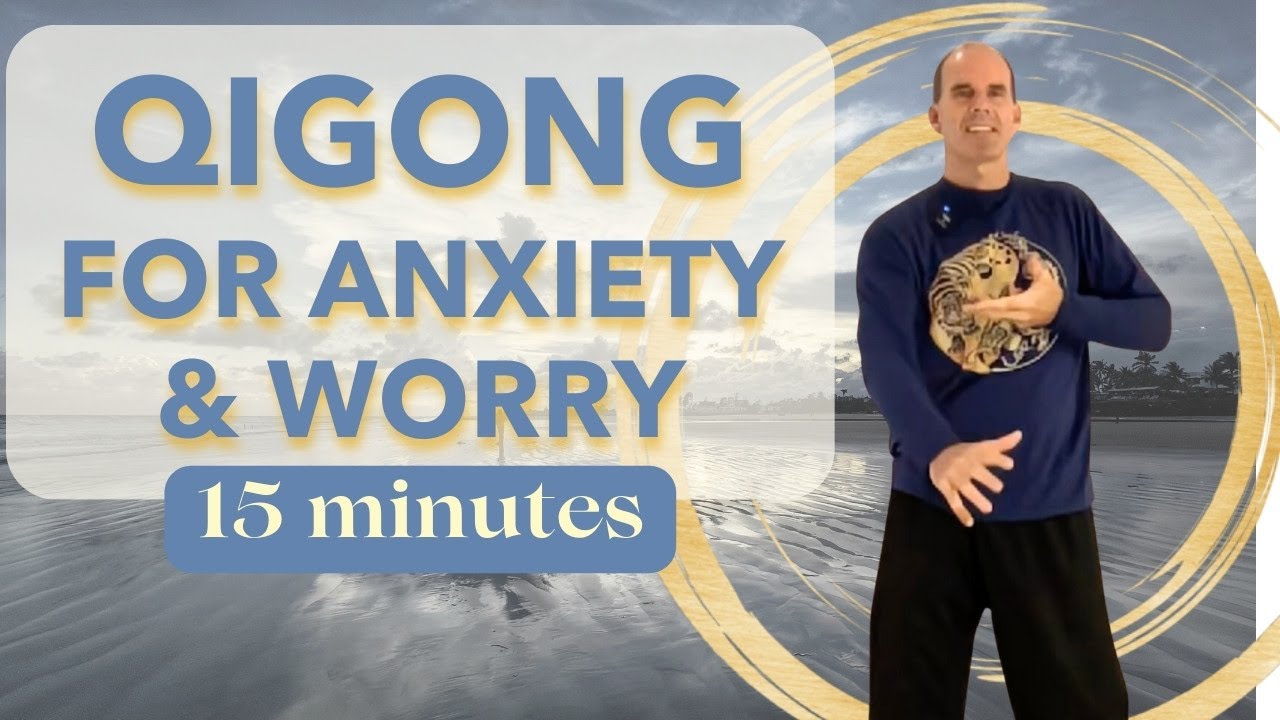
Watch: videos on this topic
Common questions
Does Qigong help with anxiety?
Many people find that a few minutes of slow Qigong breathing and gentle movement leaves them calmer and less wound up. The likely reason is that slow breathing and unhurried movement help shift the nervous system toward its rest-and-recover mode. It is a self-care practice, not a treatment for an anxiety disorder, and it works best as a small daily habit rather than a rescue only when you are already overwhelmed.
How long should I practice Qigong for stress?
Five to ten minutes is plenty to start. A short session you actually do most days will serve you far better than a long one you skip. If you only have three minutes, do the slow breathing alone and let that be enough.
Can I do Qigong for anxiety sitting down?
Yes. Every part of the routine works seated. If standing feels like too much, sit tall with your feet flat on the floor and let your hands rest or move gently. The breath does most of the work either way.
Is Qigong a replacement for therapy or medication?
No. Qigong is a gentle wellbeing practice, not a medical treatment. If anxiety is affecting your daily life, please talk with a doctor or a qualified mental health professional. Qigong can sit alongside that care as something calming you do for yourself.
This page is educational and is not medical advice. It is not a claim that Qigong treats, cures, or prevents anxiety, stress, or any condition. Individual results vary. If anxiety is affecting your daily life, or you have a health condition, are pregnant, or take medication, please talk with your own doctor or a qualified professional before beginning a new practice.